I've reviewed treadmills for years, and there are plenty of models that are fine for walking or light jogging that I wouldn't necessarily recommend for a serious runner. The three treadmills below are the ones I'd look at first if running is going to be a major part of your workouts.
They each have their own advantages, and your best choice will depend on how you train, the features you want and how much you're looking to spend.
What can you expect from the best treadmills for runners?
The best treadmills for runners typically have much sturdier construction than those built primarily for walkers or light joggers, as they need to stand up to more demanding use. There's a big difference between walking at 4 mph and running at a faster pace on an incline, especially if you're doing it several times a week.
As such, treadmills designed for running are usually more expensive. You're typically getting a stronger frame, a more capable motor and better cushioning to help reduce the impact of regular training.
You'll also find more advanced training features on many of the best treadmills, although these vary quite a bit by brand.
Some runners want guided workouts, automatic incline adjustments and detailed workout tracking, while others would rather have a simpler machine and control their workouts themselves.
Here are some of the things I'd pay particular attention to:
1. Belt/Deck: For running, I like to see a 60" long belt, especially for taller runners or anyone with a longer stride. A 20" width gives most people plenty of room, while some higher-end models give you 22". Just as important is how solid and stable the deck feels when you're actually running on it.
2. Motor: Running puts considerably more demand on the motor than walking. Rather than focusing entirely on a single horsepower number, I'd look at the overall quality of the drive system and whether the treadmill is designed to handle regular running. A strong warranty can also tell you quite a bit about how confident the manufacturer is in the machine.
3. Cushioning: This becomes especially important if you're going to be putting a lot of miles on your treadmill. The better running treadmills generally have more substantial cushioning systems that provide some give underfoot without making the deck feel overly soft or unstable.
4. Incline Capability: Incline gives you another way to vary your training and simulate changes in terrain. Most good running treadmills offer a useful incline range, and some also offer decline capability, which adds another dimension to your workouts.
5. Training Options: This one comes down largely to personal preference. Some of today's treadmills offer large touchscreens, trainer-led workouts and automatic adjustments, while others stick with traditional built-in programs. Neither approach is necessarily better for running, so I'd choose based on how you actually like to train.
The three treadmills below are all machines I'd be comfortable recommending for regular running, but there are some significant differences between them when it comes to price, training experience and overall features.
Which one of the running treadmills should you choose?
The three treadmills we've selected are all strong choices for runners, but each one is going to appeal to a different type of buyer.
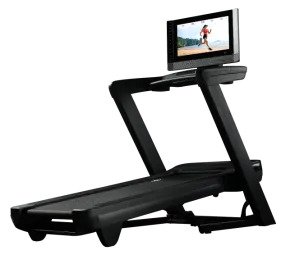
The NordicTrack 2450 is our top overall choice for runners. It gives you a powerful motor, a spacious running area, great cushioning and a higher top speed for more serious training. You also get a large touchscreen and iFIT workouts, along with both incline and decline capability.
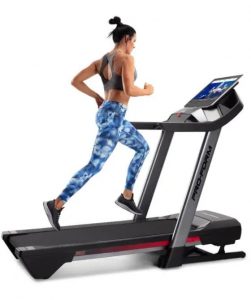
The ProForm Pro 9000 gives you a lot of the same training experience as the NordicTrack at a lower price. You still get a large touchscreen, iFIT and plenty of workout options, making it a good choice if you want the interactive features but don't necessarily need everything the 2450 offers.
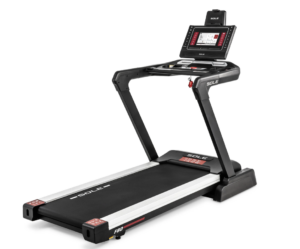
The Sole F80 is quite different from the other two. It's a great choice if you're more interested in a strong, durable treadmill than a large touchscreen and trainer-led workouts. Sole has always focused heavily on build quality and straightforward performance, and the F80 gives runners plenty of room and power without making technology the main attraction.
So your choice really comes down to what you're looking for. If you want the best combination of running performance and interactive training, we'd lean toward the 2450. The Pro 9000 gives you a similar workout experience for less, while the F80 is the one we'd look at if you prefer a more traditional treadmill.
If you're a heavier runner, training at faster speeds or expect several people in your household to use the treadmill regularly, we'd also pay particular attention to overall construction, motor strength and weight capacity rather than choosing based on features alone.