A lot of people ask us about incline and decline training, and specifically if it’s something that they need to have in order to get a good workout in on their treadmill.
The short answer is, even if your treadmill had zero incline capability (and very few don’t these days, even the most inexpensive ones) you could still get a good workout in. You can walk, jog or run at various speeds for varying lengths of time and burn calories, get your heart rate pumping and tone up the leg muscles.
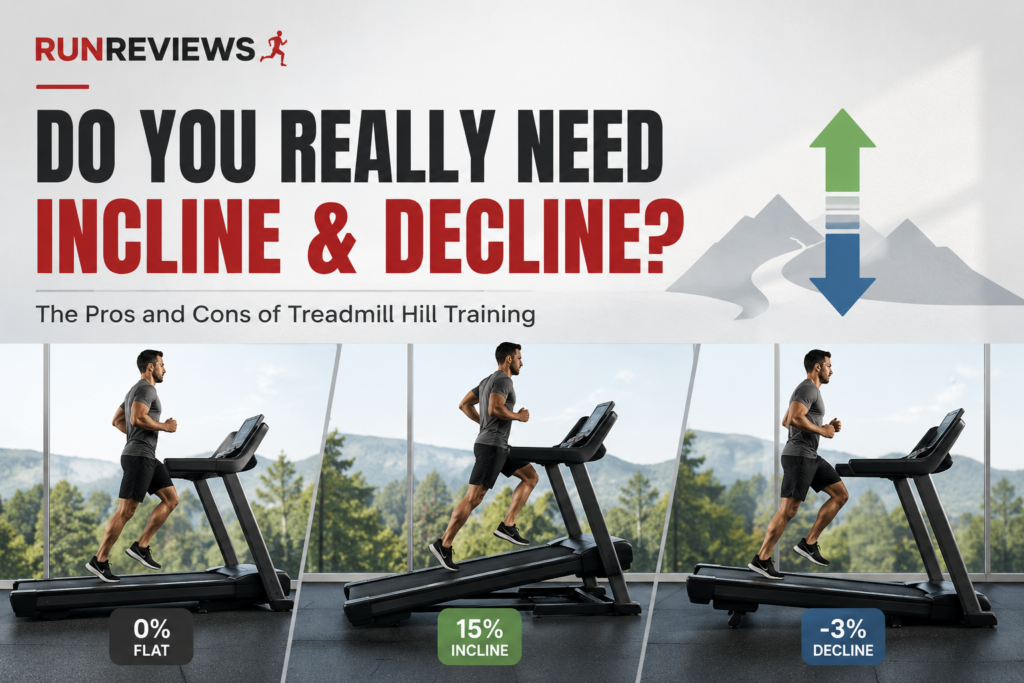
However, incline and decline treadmills let you take your workout to the next level, and more closely mimic an outdoor run, which many runners seek when it comes to an indoor workout.
When you run outside, unless you are going around a track, you will likely encounter some hills and some dips along the way. They may be brief or prolonged, but it’s very unlikely that your one, two or five mile outdoor run will be completely flat.
By having the ability to raise and lower the incline of your treadmill, your indoor run becomes more like your outdoor run, which has many advantages besides just making your workout a little more interesting.
Let’s look at a few of them…
Incline and Decline Treadmills – Main Advantages
Workout Variety
The addition of incline and decline capability means you can vary your workouts, and variety is always good when it comes to your fitness routine.
You can manually change the slope of the belt, and you also have built in workout programs on most newer treadmills that take advantage of the incline and treadmill capability.
You’ll find hill workouts, calorie workouts and interval training among other programs that automatically change the incline and or decline to challenge you throughout your routine. You can also create your own custom programs on many treadmills, choosing whatever incline and decline levels you’d like.
One thing I’ve noticed after reviewing treadmills for many years is that people tend to stick with their exercise routines longer when they have more workout options. Walking or running on the exact same flat surface every day can eventually become repetitive.
Adding hills, intervals and changes in intensity simply makes treadmill training more enjoyable.
Muscle Targeting
Of course you can work your legs on a flat treadmill, but decline and incline treadmills allow you to target different leg muscles, giving you a much more effective workout.
Think about how your legs feel after climbing a few flights of stairs. Think about the muscles that are engaged when you’re running downhill. You can hit all of those muscles effectively, and by raising and lowering the incline you’re hitting them in different ways. You just can’t do that on a regular treadmill.
Enhanced Cardio Benefits
One of the biggest advantages of incline and decline treadmill training is the increased cardio output.
Running uphill is obviously more of a challenge than running on a flat surface, so it’s a more of an intense workout especially at the highest incline levels.
But decline training is also a cardio boost, as you need to keep yourself from falling forward, a challenge you don’t have on a flat surface. Don’t believe me? Try a half hour run on a flat surface. Then try a downhill one. Which one had you huffing and puffing afterwards?
Burn More Calories
One benefit that often gets overlooked is calorie expenditure.
Generally speaking, adding incline increases the intensity of your workout and allows you to burn more calories in the same amount of time.
This is one reason incline walking has become so popular in recent years. You don’t necessarily need to run at high speeds to get an excellent workout.
A brisk walk at a moderate incline can often feel as challenging as jogging on a flat treadmill. So if you’re pressed for time, incline is a good option for you.
Better Preparation for Outdoor Running
For runners, incline and decline training can also help prepare you for races and outdoor events.
One of the biggest complaints runners have about treadmills is that they don’t always feel like running outdoors. But adding incline and occasional decline can help bridge that gap. I definitely find that mixing up the incline and decline help with my training.
Many runners even keep their treadmill set at a slight incline throughout most of their workouts because they feel it better replicates outdoor conditions.

Are Steep Inclines Necessary?
This is where I think many people get confused.
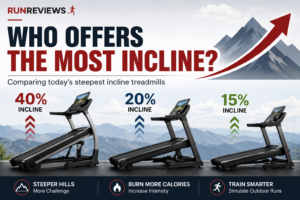
There is a big difference between wanting incline capability and needing a treadmill that goes to 20%, 30% or even 40% like the NordicTrack treadmills do.
For many walkers and runners, a treadmill that offers 10% to 15% incline is probably more than sufficient.
Very steep inclines can certainly create challenging workouts, but many users rarely take full advantage of those upper ranges.
Incline/Decline Treadmills are More Expensive
One of the only drawbacks of incline and decline treadmills is the fact that they tend to be a bit more expensive than treadmills without that capability. Most treadmills will give you at least 10 degrees of incline, but you’ll pay more for 15, 20 or 30%.
The Incline Trainers from NordicTrack like the popular X16 or X24 offer the most incline capability on the market, at a whopping 40%, as well as decline down to 6%, also more than any other treadmill.
But these advanced cardio machine are definitely on the pricey side, starting at around $2,700 for the base model all the way up to $3,000 or more for the top of the line model.
So although the added capability is nice, it may not be within your budget to get a treadmill with steep incline and/or decline capability.
So Do You Really Need Incline and Decline?
The bottom line here is that incline and decline training is beneficial, but not an absolute must, especially if budget is a concern.
You can find some great treadmills on the market without much incline and zero decline, and still get a great walking, jogging or running workout.
That said, if you enjoy workout variety, want to target different muscle groups, burn more calories or train in a way that more closely resembles outdoor running, incline and decline features can absolutely be worth having.
Personally, I consider incline capability to be far more important than decline capability for most users, although both can add another dimension to your workouts.