There is no single best treadmill for everyone. A treadmill that makes perfect sense for someone who walks for 30 minutes a few times a week may be a terrible choice for a runner putting in 30 or 40 miles a week.
We’ve reviewed hundreds of treadmills over the years, and one of the biggest mistakes we see is people focusing on finding the “best” treadmill rather than the best treadmill for how they’re actually going to use it.
Before you start comparing models, prices and features, there are a few basic questions you should ask yourself. The answers will help narrow down your choices considerably and may even save you from spending money on a lot of treadmill you don’t really need.
Who is going to use the treadmill?
The first thing to consider is who will actually be using the treadmill. If you’re the only person using it for a few walking workouts each week, your needs are going to be very different from a family where two or three people plan on running regularly.
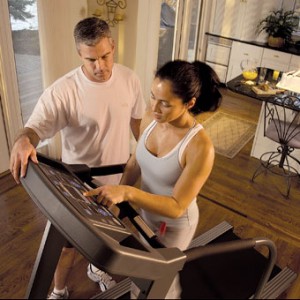
Multiple users generally mean more total hours on the treadmill, so we’d lean toward a more substantial machine with a stronger motor and frame. This becomes even more important if several people in the household plan to run rather than walk.
You also need to consider the size of the people using it. Taller runners will usually be more comfortable with a longer running surface, while larger users should pay particular attention to the treadmill’s weight capacity and overall stability.
Don’t buy based only on the person who will use it most. If someone else in the house is taller, heavier or a more serious runner, we’d choose the treadmill with that person in mind. It’s much better to have a little more treadmill than you need than to discover later that one person in the house can’t comfortably use it.
Where will you be using the treadmill?
This is something that’s very easy to overlook when you’re shopping online.
Before buying anything, figure out exactly where the treadmill is going and measure the space. And don’t just look at the treadmill’s dimensions. You need enough room to comfortably get on and off the machine and some clearance around it.
If space is limited, a folding treadmill can make a lot of sense. Today’s better folding treadmills are very different from the lightweight folding machines that were common years ago. There are now plenty of substantial folding models that are more than capable of handling regular running.
Ceiling height is another consideration, especially if you’re putting the treadmill in a basement. Remember that you’re standing several inches off the floor before you even start raising the incline. A taller user on a treadmill at maximum incline may need considerably more clearance than you expect.
Noise can matter as well. If the treadmill is going into an apartment, upstairs bedroom or a room next to someone else’s living space, we’d put a little more emphasis on a quiet motor and smooth operation.
Will you be walking, jogging or running?
This is probably the most important question you can answer.
If you’re primarily walking, you simply don’t need the same treadmill as someone who’s training for a marathon. You can usually spend less and still get everything you need.
Jogging puts more demands on the machine, and regular running takes that another step further. The faster you run and the more often you train, the more we’d prioritize a solid frame, comfortable running surface and a machine designed to handle that kind of use.
We’ve seen plenty of inexpensive treadmills advertised with surprisingly high top speeds and impressive specs. That doesn’t necessarily mean we’d want to run on them every day. There’s a big difference between a treadmill being capable of reaching 12 mph and one we’d actually recommend for serious running.
Be realistic about what you’re going to do. If you’re buying a treadmill because you want to start walking three or four days a week, don’t shop for the runner you might become two years from now. On the other hand, if you’re already a runner, don’t try to save a few hundred dollars by buying a machine designed primarily for walking.
How often will you use it?
Walking versus running isn’t the only consideration. Frequency matters too.
Someone running twice a week isn’t putting the same demands on a treadmill as someone running six days a week. Likewise, a treadmill being used by three members of a family can rack up quite a few hours even if none of them is a serious athlete.
The more use you expect, the more we’d lean toward buying something substantial enough to handle it. This is one area where spending a little more upfront can make sense.
At the same time, be honest with yourself. If you’re looking for a treadmill for occasional bad-weather workouts or a little extra walking during the winter, you probably don’t need one of the most expensive machines on the market.
How important are speed and incline?
Most home treadmills offer more speed than the average person will ever need. A 12 mph top speed works out to a five-minute mile, so unless you’re doing some very fast interval training, top speed probably shouldn’t be one of the main things determining which treadmill you buy.
Incline is different because it’s useful at almost every fitness level. Walkers can use it to make a workout considerably more challenging without having to run, while runners can use it for hill training and adding variety.
Most home treadmills top out at around 10% to 15% incline, and for the vast majority of people that’s plenty. Even walking at a 5% to 10% incline can make a workout considerably more challenging without increasing your speed.
Some treadmills now offer very high incline levels (20%, 30% and even 40%) as well as decline training (-3% to -6%). Those can be great features if you know you’ll use them, but we wouldn’t choose a treadmill solely because it offers a few extra percentage points of incline.
Think about the workouts you actually do rather than simply choosing the treadmill with the biggest numbers.
How much technology do you actually want?
This has become a much bigger consideration than it was when we first started reviewing treadmills.
Large touchscreens, streaming entertainment, trainer-led workouts and automatic workout adjustments are now common on many home treadmills. For some people, these features are a huge part of the appeal and may actually make them more likely to use the treadmill regularly.
Other people would rather have simple controls, a basic display and a place to put their phone or tablet.
Neither approach is better. We just wouldn’t pay considerably more for a large touchscreen and an interactive workout platform unless you actually want to use them.
Subscriptions are worth considering as well. Some treadmills offer plenty of functionality without one, while others are clearly designed around a paid workout platform, like iFIT. Make sure you know what you’ll still be able to do if you decide you don’t want to keep paying for the service a year or two from now.
Think About How You’ll Really Use Your Treadmill
It’s very easy to get caught up comparing motors, screens, incline levels and dozens of other specifications. Before doing any of that, figure out what you actually need.
Who’s using it? Are you walking or running? How often? Where is it going? Do you want interactive workouts or would you rather keep things simple?
Once you answer those questions, you’ve already eliminated a large percentage of the treadmills on the market.
The next question is how much you actually need to spend. That’s what we cover in Part 2:
How Much To Spend On A Treadmill
Summary
1. How To Buy The Best Treadmill For Your Budget
2. How Much To Spend On A Treadmill
3. What Gives Value To A Treadmill